September 4, 2026
One Peering Spat Can Partition a Country
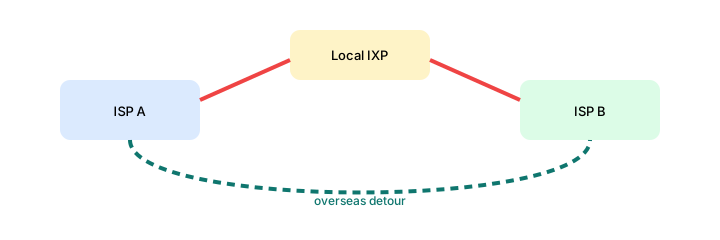
Cables get the documentaries. Peering gets the outage. Two networks refuse to exchange traffic at a local IXP, so packets detour through another continent or vanish. Users say the internet is broken. The prefix is still announced. The origin is still valid. The handshake in the building downtown is what died.
What a depeering looks like from a browser
Origin ASN unchanged. ROA still valid. Looking-glass paths suddenly insert a distant transit that never used to be there — or one collector in that country goes empty while the rest of the world is fine. Traceroute from inside the region hairpins abroad and comes back. That is not “DNS cache.” That is a relationship.
Why AI and SaaS tickets cluster by city
Anycast wants a nearby PoP. If the local ISP no longer peers with the CDN or cloud that fronts the model API, users in that metro get the long way around. A global status page stays green because other countries still have the handshake. Your job is to show the AS path from the angry city, not a world heatmap.
Evidence that ends the blame carousel
- Prefix and origin on BGP Lookup — prove the destination still exists.
- Two looking-glass views: in-region and far away.
- Traceroute from the victim network.
- A timestamp. Peering fights resolve as quietly as they start.
Send that to the ISP. “Website down” gets a reboot script. “AS path used to be A-IX-B and is now A-transit-ocean-B” gets a peering engineer.
Open the Looking Glass on a destination that fails in one city only. If the local collector is the odd one out, you are looking at a handshake, not a host.
FAQ
Can a customer force two networks to peer?
No. You can change providers, use a tunnel, or wait. You cannot legislate a free session from a tweet.
Is this the same as a cable cut?
Same user pain, different object. Cuts remove capacity. Depeering removes permission.